

A finance function should do more than explain where the cash went; it should help decide where it goes next. Moving from a reactive to a strategic finance function means turning reliable monthly reporting into forward-looking forecasts, scenario modelling and clearer decisions. A practical foundation is a consistent monthly close in five working days or fewer, supported by budgeting and cash flow planning.
If you think of finance as bookkeeping, payroll and year-end accounts, you’re not alone. Those activities matter, but finance can also show how today’s performance affects tomorrow’s choices, including whether the business can afford to hire, invest or expand.
This article explains how reporting, technology and rolling forecasts create a stronger basis for action. You’ll learn how to use scenarios to assess growth and hiring decisions, connect budgets to business priorities, and plan cash flow with greater confidence. The focus is practical: moving finance from recording results to preparing the business for what comes next.
Key Takeaways
- Standardise the month-end close and management reports so leaders can act on current, consistent information.
- Use base, upside and downside scenarios to assess growth and hiring choices before committing resources.
- Link budgets to the business’s key drivers and use cash flow forecasts to anticipate funding pressures.
- Automate repetitive reporting where it helps, freeing finance to focus on analysis, risks and decisions across the business.
Building a standardised monthly close and management reporting
A consistent month-end close gives finance leaders a dependable starting point for decisions. A finance function stuck in reactive mode may take more than 10 working days to close its books. A more structured foundation aims to complete the close in five working days or fewer, then issue reports while the figures still matter.
Early-stage businesses may rely on part-time bookkeeping, cash-basis reports and year-end tax preparation. These can support basic accounting, but offer limited visibility into changing cash needs or performance during the year. If revenue looks strong but cash is tight, monthly reporting can help show whether late customer payments, rising costs or stock commitments are behind the gap.
Standardise the close calendar, assign responsibility for each task and reconcile key accounts before preparing management reports. Include profit and loss, balance sheet and cash-flow information, then compare actual results with the budget. A monthly variance review helps explain what changed and why. Finance can then connect the figures to business goals, such as protecting margins or funding planned growth.
Management accounting adds context to those reports. Finance leaders can, for example, model how a planned price change or higher staffing costs might affect margin and cash. Scenario analysis helps identify risks and opportunities before they show up in results. Reporting need not stop at recording past activity; it can support proactive decisions throughout the year.
For UK businesses, finance transformation should preserve accurate accounting records and support applicable statutory and tax reporting. The reporting framework depends on the business’s structure and activities, so process changes must retain the information needed to meet those obligations.
Transformation costs depend on scope, data quality, systems and the level of support required. Pricing is provided after a quote request, with those factors shaping the work involved.
Automate repeatable tasks first, such as cash-flow updates, accounts receivable and payable tracking, and budget-versus-actual analysis. This can free time for insight. Common barriers include inconsistent data, unclear task ownership and workflows that no longer reflect business goals. Address them with agreed definitions, named responsibilities and regular reviews.
Scenario modelling for growth and hiring decisions
Scenario modelling turns a proposed decision into a set of financial outcomes. Leaders can compare the likely effects of hiring, expansion or changes in sales activity before committing resources. A model links assumptions, such as sales volume, salary costs and payment timing, to cash, revenue and margin. This makes financial data useful for weighing choices, not just recording results.
Build three financial scenarios: base, upside and downside. The base case reflects the current plan; the upside case tests stronger demand, while the downside case tests weaker sales or higher costs. For example, a business considering a go-to-market hire could model starting recruitment now against delaying the appointment by 60 days. Compare the effect on capacity, expected revenue and cash requirements.
Forecasting and scenario planning work best together. A rolling forecast shows the expected path based on current information. Scenario analysis then changes selected assumptions to show how outcomes may differ. Comparing the two makes uncertainty visible and helps leaders discuss trade-offs with commercial teams.
Agree decision rules before a scenario becomes urgent. Set out the evidence that would prompt action, the person responsible and the next step. If sales fall below plan, for instance, leaders might pause discretionary recruitment, review marketing commitments or protect cash. Prepare two to three possible actions for each material risk, so a change in conditions leads to an informed response rather than hurried debate.
Review assumptions as actual results arrive. A hiring model may need updating if recruitment takes longer or customer demand shifts. Keep the model focused on decisions: too many variables can obscure which factors matter most. A growth planning discussion can help connect these scenarios with the organisation’s wider priorities and investment choices.
Budgeting and cash flow planning
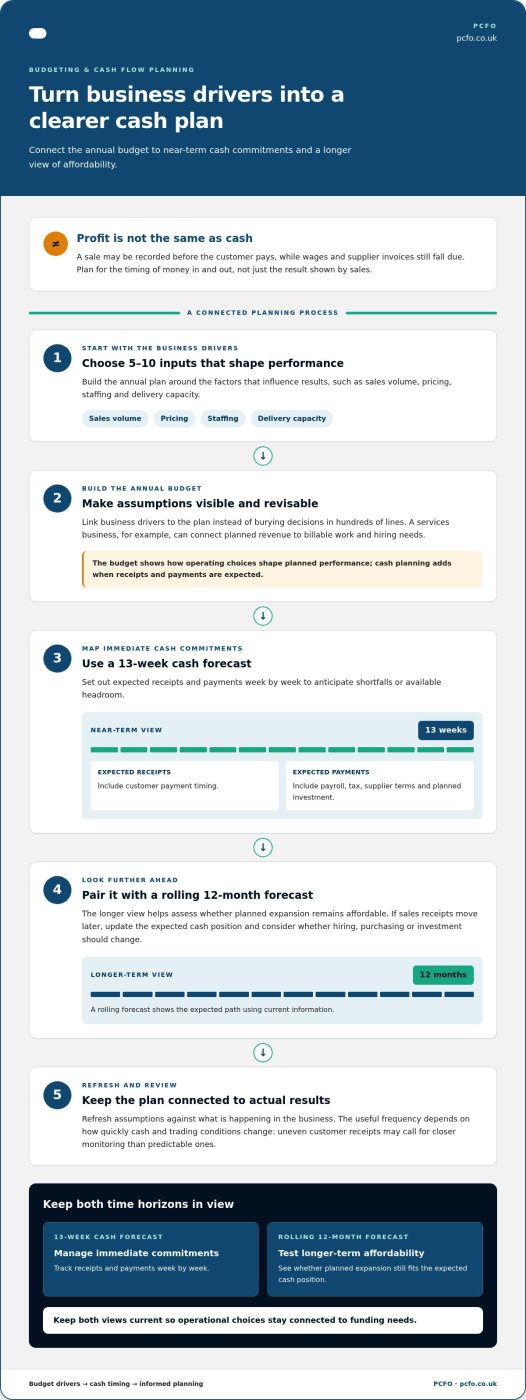
A useful budget explains which business drivers shape performance, rather than burying decisions in hundreds of lines. Build the annual plan around five to ten key drivers, such as sales volume, pricing, staffing and delivery capacity. For example, a services business can connect planned revenue to billable work and hiring needs. This makes assumptions visible and easier to revise.
Profit and cash are different measures. A sale recorded today may not bring cash in until the customer pays, while wages and supplier invoices still fall due. A 13-week cash forecast maps expected receipts and payments week by week. Include customer payment timing, payroll, tax payments, supplier terms and planned investment to anticipate shortfalls or available headroom.
Pair that near-term view with a rolling forecast covering 12 months. The cash forecast helps manage immediate commitments; the longer view shows whether planned expansion remains affordable. If sales receipts move later, update the expected cash position and assess whether hiring, purchasing or investment should change. Keeping both views current helps leaders connect operational choices with funding needs.
Forecasting becomes more useful when teams refresh assumptions against actual results. Some finance leaders are moving towards continuous forecasts updated frequently, rather than relying only on periodic snapshots. The right frequency depends on how quickly cash and trading conditions change. A business with uneven customer receipts may need closer monitoring than one with predictable contracts.
Automate repeatable processes such as cash updates, accounts receivable and payable tracking, and budget-versus-actual comparisons. This can reduce manual collation and leave more time to examine why results differ. Use the forecast to agree practical responses: follow up overdue invoices, defer non-essential spending or adjust purchasing. A budget should guide choices, not become a fixed target that ignores changing conditions.
What does a strategic finance function do compared with a reactive finance function?
A reactive finance function mainly records transactions, prepares accounts and explains results after they happen. It may, for example, report a cash shortage only after supplier payments become difficult. A strategic function also looks ahead, using forecasts, financial data and operational measures to identify pressure sooner and help leaders choose a response. Both need accurate accounting, but strategic finance connects the figures to business decisions.
The difference shows in how finance works with other teams. Instead of sending a report and waiting for questions, finance leaders can discuss investment plans with sales, product and operations colleagues. If sales proposes entering a new market, finance can test expected revenue, costs, cash needs and risks. That analysis helps the organisation weigh the opportunity against other priorities, such as hiring or improving existing services.
Modern finance teams can combine rolling forecasts, predictive analysis and real-time KPI dashboards to monitor changes. A dashboard might show sales conversion alongside margin and cash collection, helping leaders see how operational performance affects financial results. Automation can handle repetitive data tasks, leaving finance professionals more time for judgement-led work, including scenario modelling and risk analysis. The tools should support decisions, not replace careful review.
A strategic approach also connects budgets and capital allocation to long-term goals. Finance can, for example, compare the expected return and cash impact of investing in research and development, marketing or talent. Regular board updates can make assumptions, risks and performance clearer. For businesses planning a sale, financial planning can help assess whether current decisions support their intended exit strategy. In cases where an exit or restructuring transitions corporate value into estate planning structures, utilising trust accounting services for high net worth families can ensure fiduciary reporting and legacy preservation remain accurate. The right focus depends on the organisation’s goals, resources and stage of growth.
If your finance reporting explains the past but gives limited support for decisions ahead, explore Finance Director support to strengthen planning and financial decision-making.
PCFO: Finance Director Services
PCFO provides Finance Director Services for growing businesses that need financial insight to guide decisions, not just records of past performance. If your forecasts, cash planning or management reporting aren’t giving leaders a clear basis for action, a Finance Director can connect financial information with business priorities.
As plans become more complex, Chief Financial Officer Services can provide broader financial leadership. Business Growth Advisory and Business Planning Consultant support can help owners assess opportunities, align resources and plan for the next stage. The right focus depends on the decisions your business needs to make and the financial support needed to make them.
To discuss how PCFO could support your business, contact the team.
Make finance a partner in what comes next
Moving from a reactive to a strategic finance function ultimately gives business leaders a stronger basis for choosing what to do next. Identify where financial insight would make the greatest difference, whether that means evaluating a growth opportunity, strengthening planning or improving confidence in key decisions.
PCFO offers Finance Director Services, Chief Financial Officer Services and Business Growth Advisory to help businesses develop that financial perspective. The right support depends on your priorities, whether you need strategic input on a particular decision or ongoing financial leadership as the business evolves.
A clear conversation about your current challenges can help define what useful support looks like and where to focus first. Contact PCFO to discuss your finance function and explore how it could better support your plans.
With a considered approach, finance can become a more active part of shaping your business’s future.
Frequently Asked Questions
What are the benefits of moving finance from reactive to strategic?
Moving from a reactive to a strategic finance function helps leaders compare choices using commercial and financial evidence. This can improve capital allocation, make emerging risks visible sooner and clarify the financial consequences of changing priorities. For example, finance can assess whether a proposed product launch supports the company’s return objectives, then track whether results match the original case.
What steps should a UK business take to transform its finance function?
Start by identifying which business decisions currently lack useful financial input. Then review data definitions, reporting responsibilities and the systems that feed management information. Agree a focused set of measures with department leaders, and ensure records continue to support applicable UK accounting, tax and statutory reporting needs. Introduce changes in manageable stages, reviewing whether each improves the quality or usefulness of decisions.
Which finance technology and data capabilities support strategic decision-making?
Strategic decisions benefit from connected accounting or enterprise resource planning systems, business intelligence tools and dependable data integration. These capabilities can bring sales, payroll, purchasing and finance information together for a clearer view of performance. Set access permissions and consistent definitions for measures such as recurring revenue or gross margin. A dashboard is useful only when its data is reliable and leaders understand what each measure represents.
How can a business measure finance function maturity and strategic impact?
Assess maturity through evidence of service quality and contribution to decisions, not software adoption alone. Review whether reports arrive when needed, reconciliations are dependable and forecasts explain material differences. Then examine finance’s involvement in investment choices, risk discussions and planning with department heads. Record decisions influenced by financial analysis and revisit their outcomes to judge whether finance is improving the quality of business choices.
How can finance teams improve forecasting, scenario planning and business partnering?
Finance teams can strengthen these capabilities by agreeing assumptions with sales, operations and people leaders before preparing forecasts. Ask each team to explain changes in demand, capacity or supplier terms, then reflect those drivers in the model. After a decision, compare actual outcomes with the original assumptions. This helps teams refine future forecasts and makes finance a practical collaborator, not just a reporting function.