

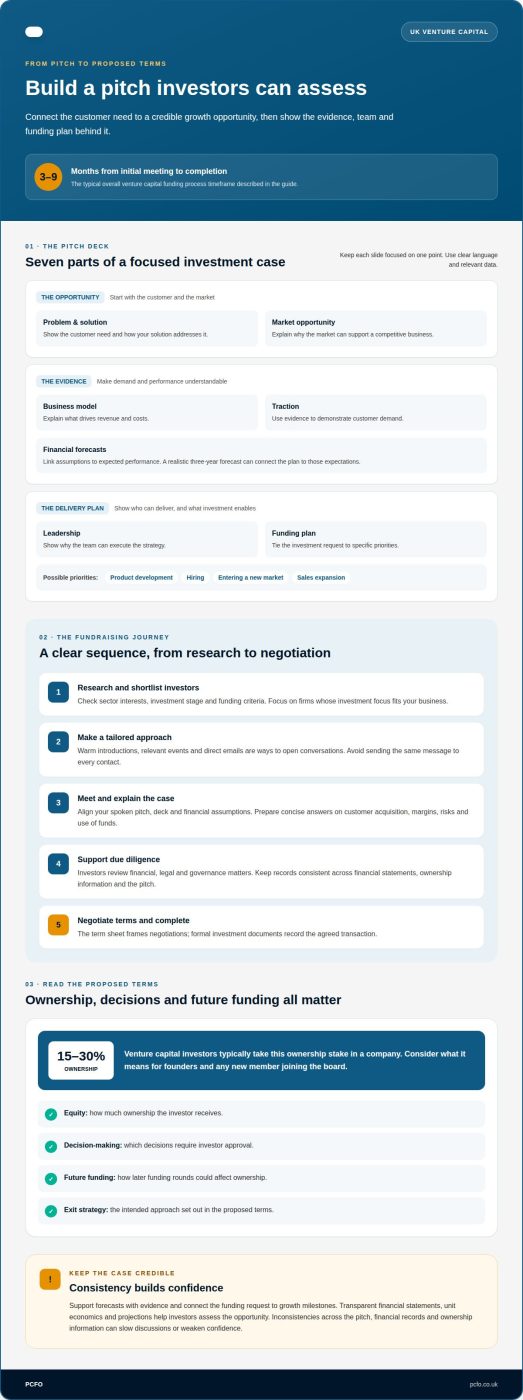
A compelling pitch is only the starting point. To secure venture capital funding in the UK, you need to show a credible growth opportunity, a capable team and a clear plan for using the investment. Target investors whose sector interests and investment criteria fit your business, then prepare to support your case during due diligence and negotiate the term sheet. The process typically takes three to nine months from the initial meeting to completion.
It’s understandable to focus first on the pitch, but choosing the right funding source matters too. Venture capital can suit early-stage businesses with strong growth potential. The right route depends on your company’s stage, funding needs and ambitions.
This guide explains what venture capital is, how to sharpen your pitch and where UK businesses can seek funding. It also covers key investment terms, so you can approach discussions with a clearer view of the decisions ahead.
Key Takeaways
- Understand how venture capital works and whether your business’s growth plans suit this form of investment.
- Shape a focused pitch around your market, traction, team, forecasts and intended use of funds.
- Compare funding routes and investor fit, then assess ownership, decision-making and exit terms before agreeing a deal.
- Strengthen your financial planning and funding readiness with strategic finance support when you need it.
What is Venture capital?
Venture capital (VC) is investment in businesses with strong potential for long-term growth. Investors provide capital in exchange for equity, taking an ownership stake and often seeking influence over strategy. Unlike a loan, VC funding does not usually require scheduled repayments. Private equity is a broader investment category, while venture capital typically focuses on younger, high-growth companies.
VC may suit a business that can grow its sales, operations and customer base without costs rising at the same pace. For example, a software company may serve more customers through an existing platform, making its model scalable. A business with limited growth potential or uncertain demand may find equity investment less suitable. Potential investors assess the team, brand, sales channels, market opportunity and evidence that customers will pay.
UK founders can also consider the Seed Enterprise Investment Scheme (SEIS) and Enterprise Investment Scheme (EIS), which offer tax relief to eligible investors and may support fundraising. According to HM Revenue & Customs (HMRC), a UK company can raise up to £250,000 in total through SEIS investments. HMRC states that a company must be less than 3 years old, have no more than £350,000 in gross assets and fewer than 25 employees to qualify for SEIS. To qualify for EIS, no more than 7 years can have passed since a UK company’s first commercial sale, according to HMRC.
These schemes can broaden investor appeal, but eligibility rules determine which route fits. A common mistake is building a funding plan around tax relief before checking the company’s eligibility. Other pitfalls include seeking more equity than the growth plan requires, accepting unsuitable investor involvement or presenting unsupported forecasts.
Prepare before approaching investors. Bring transparent financial statements, unit economics and projections that link the funding request to specific growth milestones. Explain how investment would support product development, hiring or sales expansion, and what evidence would demonstrate progress. A clear strategy helps investors assess the opportunity and lets founders judge whether VC aligns with their ownership goals and long-term plans.
Refining your pitch and brand message
A focused pitch connects your customers’ problem to a credible growth opportunity. Fundraising generally moves from investor research and an initial approach to meetings, due diligence and term negotiations.
Pitch deck content and funding plans
A pitch deck is a concise presentation of your business, its growth potential and the investment it seeks. Include the problem and solution, market opportunity, business model, traction, leadership, financial forecasts and funding plan. Explain how the investment would support specific priorities, such as product development, hiring or entering a new market. A realistic three-year forecast can connect your assumptions to expected performance. This clarity helps potential investors assess whether the opportunity fits their investment strategy and enterprise focus.
Creating an effective pitch deck
An effective deck presents evidence in a logical order, using clear language and relevant data. Start with the customer need, then show how your solution addresses it and why the market can support a competitive business. Use traction to demonstrate demand, and explain what drives revenue and costs. Keep each slide focused on one point, with charts that make key figures easy to interpret. A concise narrative can hold attention without overwhelming investors with detail. The leadership section should show why the team can deliver the plan.
Pitch preparation and investor meetings
If you’re working out how to secure venture capital funding in the UK, align your spoken pitch, deck and financial assumptions before meeting investors. Research firms by sector interests, investment stage and funding criteria, then shortlist suitable prospects. Warm introductions through existing connections can open conversations; relevant events and direct emails are other options. Tailor each approach to the firm’s investment focus rather than sending the same message to every contact.
Practise explaining what the business does, how it is performing and why the team can execute its strategy. Prepare concise answers on customer acquisition, margins, risks and use of funds. Understanding how to secure venture capital funding in the UK also means being ready for due diligence, where investors review financial, legal and governance matters before terms are negotiated. If connecting your forecast to commercial priorities is challenging, a disciplined growth strategy can help bring those plans into focus.
Term negotiation and deal structuring
A term sheet turns investor interest into proposed investment terms. Its details can affect founders’ ownership, control and ability to fund future growth.
Term sheet contents
A venture capital term sheet summarises the investment’s financial details, decision-making arrangements and intended exit strategy. It gives both sides a framework for negotiating before final documents are completed. Review how much equity the investor receives, which decisions require investor approval and how future funding rounds could affect ownership. Venture capital investors typically take 15 to 30 per cent ownership in a company. Consider how that stake affects founders and any new member joining the board.
Legal documents and due diligence
Due diligence is an investor’s review of evidence supporting the company’s financial and legal position. Expect scrutiny of financial records, legal compliance, intellectual property and governance. Organise relevant records so the company can respond consistently to questions. The term sheet sets out proposed terms; formal investment documents record the agreed transaction. Accurate information matters: inconsistencies between financial statements, ownership records and the pitch can slow discussions or weaken investor confidence.
Seed and Series A amounts and valuations
UK Series A rounds typically range from £2 million to £5 million, depending on traction, market size and valuation. These are funding amounts, not valuation figures. Valuation is negotiated in light of evidence such as revenue, customer demand, growth prospects and the capital required. Founders should compare the equity offered with the funds needed and the milestones those funds are expected to support.
Assess the complete offer, not just the headline investment. Weigh the ownership percentage against decision rights, future funding needs and the investor’s expected route to profit or exit. Clarify how the proposed terms affect existing shareholders and the company’s options for raising capital from other sources. A term sheet is a framework for negotiation, so resolve outstanding points before signing the final documents.
Typical venture capital funding sources
If you’re considering how to secure venture capital funding in the UK, start by identifying suitable investors. Approach a venture capital firm directly, seek an introduction through professional contacts or meet investors at relevant industry events. Shortlist firms by sector, business stage, investment approach and funding needs. For example, a technology-focused firm may be a closer fit for a software business than an investor focused on consumer goods.
Funding may come from individual venture capital firms or investors pooling resources. Compare sources on more than capital: consider their experience, guidance, decision-making expectations and fit with your growth plans. Keep a record of discussions and proposals so differences between offers and funding rounds remain clear. This makes it easier to assess what each investor brings beyond the money.
Angels invest personally in early-stage businesses. Grants may provide funding without exchanging company ownership, while loans create repayment obligations. The right alternative depends on your business stage, eligibility, cash flow and appetite for dilution. UK companies may also consider SEIS or EIS investment routes, which can make eligible opportunities more attractive to investors.
The British Business Bank is a government-owned business development bank dedicated to making finance markets work better for smaller businesses. A Venture Capital Trust is a company approved by HM Revenue & Customs that invests in, or lends money to, unlisted companies. These routes have different structures, so consider which best matches your fundraising purpose and company profile.
Deciding how to secure venture capital funding in the UK means comparing capital needs, ownership implications, repayment expectations and strategic contribution across possible sources. This can show whether a VC round is proportionate or another route better supports your next stage. If growth planning and funding choices need to align, develop a clear business growth strategy to guide your decision.
PCFO
PCFO helps growing businesses bring financial planning and growth strategy into focus before fundraising. If you’re preparing to approach investors, PCFO’s Business Growth Advisory and Business Planning Consultant services can help connect your funding needs with realistic plans, forecasts and commercial priorities. Finance Director Services and Chief Financial Officer Services provide strategic finance support as you assess investment decisions and plan for growth.
This support is useful when you need a clearer view of how funding could be deployed, which milestones it should support and how investor capital fits your wider business plan. It can also help you prepare for informed discussions about your company’s financial position and future direction.
Contact PCFO to discuss financial planning support for your business.
Put your funding plans into action
Understanding how to secure venture capital funding in the UK is one part of preparing for growth. Your financial strategy, forecasts and operating priorities also need to support the decisions you’ll make with potential investors. A funding plan should help you assess not only how much capital you need, but how investment fits your business’s longer-term direction.
PCFO can support this work through Finance Director Services, Chief Financial Officer Services and Business Growth Advisory. This can be useful when you’re shaping a fundraising plan, assessing growth priorities or strengthening the financial oversight behind your next stage. The focus is on helping you make informed decisions grounded in your business objectives.
If you’re ready to discuss your funding plans, contact PCFO to discuss funding. A clear financial direction can help you approach the next stage with confidence.
Frequently Asked Questions
What do UK venture capital investors look for in a startup?
UK venture capital investors look for evidence that a startup can turn investment into sustained commercial progress. Show how customers discover, adopt and continue using the product, and explain what the business has learned from early sales. For example, a founder might link customer feedback to a product change and an improvement in repeat orders. Investors also assess whether the leadership team can adapt as the company grows.
What should a UK startup include in a pitch deck and financial model?
A UK startup’s pitch deck and financial model should tell the same commercial story. Make the model’s assumptions visible, including how pricing, customer numbers, sales conversion and operating costs shape revenue and cash flow. Link planned spending to clear business outcomes, such as launching a product feature or entering a new market. Use scenarios to show how changes in key assumptions could affect funding needs and planned growth.
How much equity do UK startups typically give up in a funding round?
UK venture capital investors typically take 15 to 30 per cent ownership, although the agreed stake depends on the company’s valuation and investment amount. Consider the effect on founders’ ownership after the round, not just the percentage offered to the incoming investor. For example, model how a proposed share allocation and any planned employee option pool could change existing shareholders’ proportions before accepting terms.
How can founders compare UK venture capital term sheets and negotiate terms?
Founders can compare UK venture capital term sheets by assessing the full package, not just the proposed investment. Compare the ownership stake, investor decision rights, conditions and exit arrangements. Identify which terms affect day-to-day control, future fundraising flexibility and the founders’ position if the company is sold. Then prioritise the points that matter most to the business and negotiate them with clear reasons grounded in its plans.
Which UK grants, angel investors, and alternatives to VC funding are available?
Angels invest personally in early-stage businesses, while grants can provide funding without giving up ownership and loans require repayment. The right alternative depends on your business stage, eligibility, cash flow and appetite for dilution.