

A peak season can make a business look healthier than its full-year cash position suggests. A seasonal business budget should cover 12 months, mapping expected income and spending across busy and quiet periods. Effective financial planning for seasonal businesses also means keeping a weekly cash-flow view, so potential gaps are visible before bills fall due.
When sales rise and fall with the calendar, covering year-round costs while preparing for the next busy spell can be difficult. Financial planning for seasonal businesses helps you decide how much cash to set aside, when to manage spending and how to time payments.
This article explains how to build a seasonal budget, forecast cash flow and plan reserves. It also covers ways to develop off-season income and negotiate customer and supplier payments to better match your trading cycle.
Key Takeaways
- Set aside part of peak-season earnings and use a rolling forecast to spot cash gaps before they affect essential bills.
- Separate fixed costs from variable spending, then target costs you can adjust during quieter periods.
- Explore off-season income that makes use of your existing skills, assets or customer relationships.
- Invoice promptly and agree payment dates with customers and suppliers that better reflect your seasonal cash flow.
1. Managing cash flow across peak and off-peak seasons
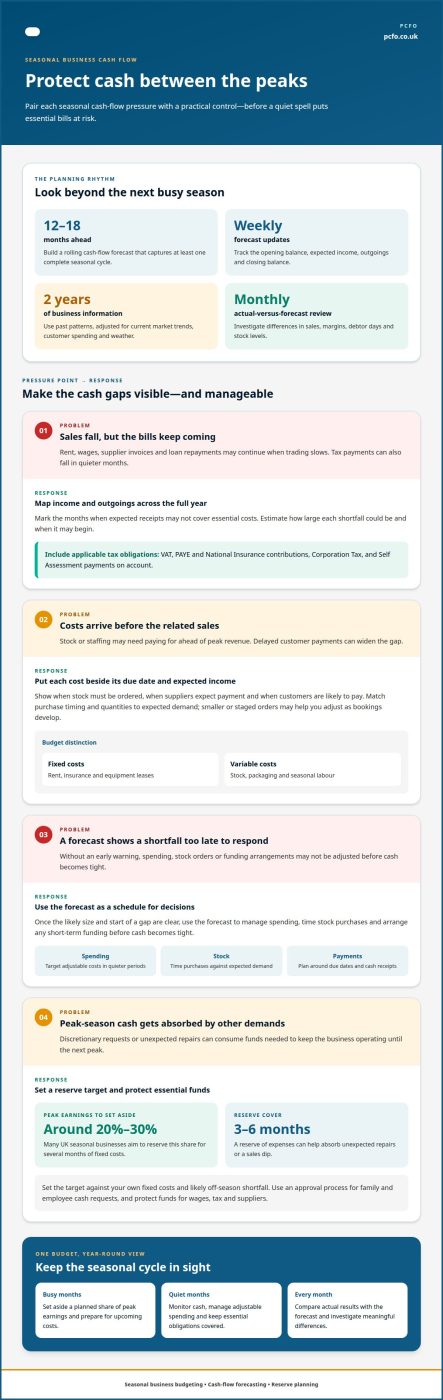
UK seasonal businesses should plan for lower cash inflows and ongoing or increased outgoings when trading slows. Risks include fixed bills continuing as sales fall, stock or staffing costs arriving before peak revenue, delayed customer payments, and tax or loan payments falling in quieter months. Include VAT, PAYE and National Insurance contributions, Corporation Tax, and Self Assessment payments on account where applicable in the forecast.
Build a rolling cash-flow forecast covering 12 to 18 months, so it captures at least one complete seasonal cycle. Track the opening balance, expected income, outgoings and closing balance, then update the forecast weekly. Use at least two years of business information to identify recurring sales patterns, and adjust expectations for current market trends, customer spending and weather.
Mark the months when receipts may not cover rent, wages, supplier invoices or loan repayments. Estimate the size of each shortfall and when it is likely to begin. This turns the budget into a practical schedule for managing spending, timing stock purchases and arranging any short-term funding before cash becomes tight. Compare actual results with the forecast monthly, and investigate differences in sales, margins, debtor days and stock levels.
During peak months, transfer a planned share of earnings into a separate reserve account. Many UK seasonal businesses aim to set aside around 20% to 30% of peak earnings for several months of fixed costs. A reserve covering three to six months of expenses can also help absorb unexpected repairs or a sales dip. Set the target against your own fixed costs and likely off-season shortfall.
Set clear limits for family and employee requests for cash during slower periods. For example, establish an approval process and protect funds set aside for wages, tax and suppliers. This helps prevent discretionary spending from consuming the cash needed to keep the business operating until the next peak. Strong financial planning for seasonal businesses links each cash decision to a forecast need and a specific trading period.
2. What is a seasonal business budget?
A seasonal business budget maps expected income and spending across 12 months, including busy season peaks and quieter periods. It separates fixed costs, such as rent, insurance and equipment leases, from variable costs, such as stock, packaging and seasonal labour. This distinction shows which outgoings continue despite fluctuations in sales and which can change with demand.
List each cost by its due date, then compare it with expected sales for that period. For example, a business may need to buy stock before its main trading season, so the budget should show the cash required before the related income arrives. This helps identify when working capital will be under pressure and whether planned funding is for essential operations or growth.
Unsold stock can tie up capital and add storage costs after demand falls. Review quantities and sales patterns before the season ends, then plan practical ways to sell remaining goods. Promotions, alternative sales outlets or bundled offers can help shift suitable stock. Include any reduced selling price in the budget so clearance plans support cash flow without hiding the true margin.
During slower periods, review supplier rates, utility use and recruitment processes for potential savings. Retain the skilled staff needed for year-round work, then match additional staffing to expected peak-season demand. Flexible staffing or renting equipment used only at peak times can bring some costs closer to revenue. Account for service needs and the cost of restarting operations before making changes.
UK tax planning means including the timing of VAT, PAYE and National Insurance contributions, Corporation Tax, and Self Assessment payments on account where applicable. Consider Making Tax Digital processes alongside the business’s record-keeping and reporting arrangements. Build these obligations into the budget around expected trading periods, rather than treating tax money as available for routine spending.
3. Diversifying revenue and off-season promotions
Off-season income works best when it builds on existing skills, assets or customer relationships. A tour operator could offer local-history workshops, while a garden business might provide maintenance visits outside its main season. Other options include hiring out equipment, subletting unused premises, offering consultancy or introducing complementary services. Choose ideas that fit your operations and can attract customers during quieter periods.
Promotions can bring future revenue forward or create demand when usual bookings slow. Offer incentives for advance bookings for the next busy season, or promote maintenance work and limited-time services during the off-season. For example, a holiday accommodation business could promote winter maintenance stays or encourage early reservations. Before launching an offer, calculate delivery expenses and likely margin, not just sales potential.
Time purchases around the revenue cycle to protect working capital. List when stock must be ordered, when suppliers expect payment and when customers are likely to pay. Then align purchase timing and quantities with expected demand. If a product sells mainly in summer, ordering too much well beforehand can leave capital tied up in stock. Smaller or staged orders may help the business adjust as bookings develop.
Diversification should support profits, not add complexity without a clear return. Test one off-season offer first, using customer feedback and past sales patterns to shape its price and delivery. Account for additional materials, staff time, marketing and any effect on core operations. If the idea requires credit, include repayments in the assessment and consider whether expected income can support them outside peak trading. Keep the offer only if its contribution justifies the extra costs.
Quieter periods can also help prepare the business for future demand. Seasonal businesses can use this time for staff upskilling, marketing improvements or exploring new markets, while developing offerings suited to their existing skills. These activities can help reach customers beyond the main trading period without moving away from the business’s established capabilities.
When considering an additional product or service, assess whether it complements the business’s existing offer and can appeal to customers during the off-season. Training or consultancy can provide another way to use existing expertise, while hiring out assets or equipment makes productive use of resources when they are less needed for core operations.
4. Rescheduling payments and negotiating payment terms
Seasonal businesses can ease cash pressure by matching payment dates to expected income. Ask suppliers whether invoices can fall due after peak sales or whether payments can be split across agreed dates. Discuss changes before ordering stock, and record the agreed terms alongside inventory purchase dates. This gives both parties a clearer view of when cash will move.
For VAT, include expected payment dates and amounts in the cash-flow forecast, then set money aside as revenue is earned. This helps prevent funds reserved for VAT from appearing available for other spending during a busy trading period. Review the forecast as sales change so the provision reflects current trading, not an outdated estimate.
Invoice promptly after completing work or dispatching orders, and apply clear payment terms consistently. Follow up overdue invoices quickly and record promised payment dates. For off-season income, annual pricing, retainers, subscriptions, deposits or staged billing can spread customer payments across the year. Choose a structure that suits the service and makes each payment date clear.
To finance a seasonal business, consider working capital finance or an overdraft as a planned bridge between payables and customer receipts. Short-term facilities may suit temporary operating costs, while long-term borrowing is generally better matched to equipment, premises or growth investment. Compare repayment dates with seasonal income and assess the full terms before committing.
Set prices that account for delivery expenses, demand and the margin needed to support operations. Use sales history to plan inventory quantities, then schedule stock purchases close enough to expected demand to avoid tying up working capital too early. Negotiate supplier terms around purchase dates rather than accepting deadlines that precede likely customer receipts.
If changing payment terms or funding arrangements would help protect seasonal cash flow, get support with seasonal financial planning.
A seasonal payment calendar helps put these arrangements into practice. Schedule recurring payments to align with seasonal revenue, and consider arranging payments for the highest-earning months while negotiating longer payment terms. During off-peak periods, extended supplier terms may help maintain liquidity. Flexible terms with suppliers or creditors can also align outgoing payments with seasonal cash flow. Prompt invoicing and follow-up on overdue customer payments can reduce delays in receipts.
PCFO: Chief Financial Officer Services
PCFO provides Chief Financial Officer Services for businesses that need experienced financial leadership to manage seasonal cash-flow pressures and plan ahead. If forecasts, payment timing and off-season funding are difficult to coordinate, this support can bring those decisions together in a clear financial plan.
PCFO’s Business Planning Consultant offering can connect seasonal budgets with wider business priorities, while Finance Director Services support ongoing financial planning and decision-making. For businesses looking to build new income streams or prepare for growth, Business Growth Advisory can help assess the financial implications and plan next steps.
Consider working with PCFO when seasonal fluctuations make it harder to balance immediate cash needs with longer-term plans. Contact PCFO to discuss the financial planning support your business needs.
Make your next financial decision with confidence
The next step is to decide what your business needs to be ready for, not just what it needs to manage today. A new market, changing customer behaviour or investment in capacity can affect how much financial flexibility you need. Use your planning process to connect these strategic choices with the business’s ability to fund them.
Experienced financial leadership can turn financial planning for seasonal businesses into a practical framework for decision-making. PCFO offers Finance Director Services, Chief Financial Officer Services and Business Growth Advisory to help businesses assess priorities and plan their next moves.
If you want to discuss how your financial strategy can support the direction of your business, contact PCFO to discuss your finances. A considered plan can help you approach future decisions with greater clarity and confidence.
Frequently Asked Questions
What is a seasonal business budget?
A seasonal business budget is a year-round plan that accounts for trading peaks and quieter periods. It helps owners decide how much income must support ongoing operations and which spending can move with demand. For example, a business that closes in winter can plan essential premises costs separately from seasonal stock purchases, recruitment and promotional activity. Review assumptions when customer demand or operating plans change.