

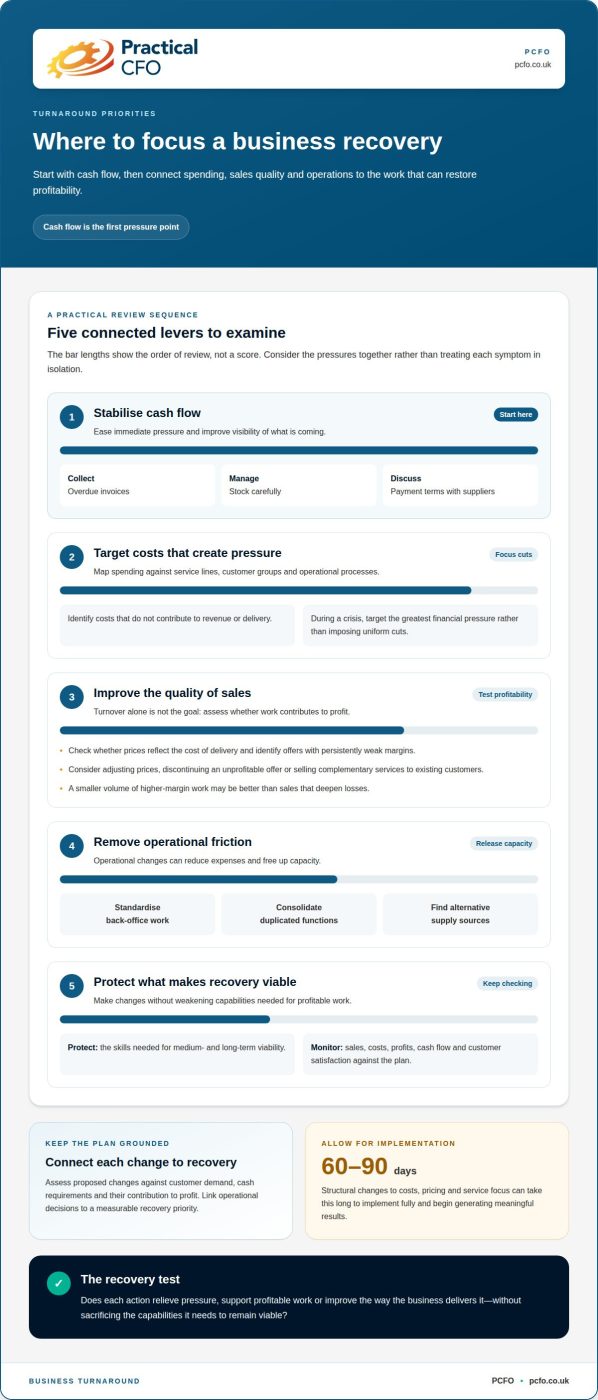
Cash flow is the first pressure point a turnaround needs to address. Financial turnaround strategies for struggling companies combine short-term cash controls with cost reduction, operational improvements and a clear plan to restore profitability. The aim is to stabilise the business while identifying what is driving its difficulties.
It’s easy to treat falling sales, rising costs and late payments as separate problems. A turnaround is more effective when leaders consider these pressures together and align decisions about spending, suppliers, customers and operations around one recovery plan. Collecting overdue invoices, managing stock carefully and discussing payment terms with suppliers can ease immediate cash pressure. A cash-flow forecast helps leaders see what is coming and act before a shortfall becomes urgent.
This article explains what a business turnaround involves and which warning signs call for action. It covers practical ways to stabilise cash flow, control costs, improve operations and communicate with employees and financial stakeholders. It also explains how experienced finance leadership can help shape a recovery plan around the business’s needs.
Key Takeaways
- Use financial reports, sales trends and payment pressures to identify what is driving the decline before choosing a recovery response.
- Review costs and operations together, protecting work and capabilities that support the business’s long-term viability.
- Communicate a clear, achievable recovery plan to employees and financial stakeholders, especially when debt payments may be difficult.
- Build stronger cash-flow visibility with a weekly forecast covering the next 12 weeks, then prioritise practical actions to protect liquidity.
Why Pursue a Business Turnaround Strategy?
A turnaround gives leaders a structured way to address declining performance and restore sustainable profitability. Start with evidence: review financial reports, sales trends and payment pressures to understand what is driving the decline.
Warning Signs of Business Distress
Business distress is a pattern of worsening financial or operational results that threatens a company’s ability to continue trading. Track warning signs together, including falling sales, rising costs, missed payments, negative cash flow and customer losses. Persistent losses, shrinking market share or uncompetitive products may point to deeper problems. Spotting these signals early helps leaders distinguish temporary pressure from a need for restructuring.
Diagnosing Root Causes
Diagnosis means tracing poor results to the decisions or conditions causing them, rather than treating each symptom separately. Compare sales reports with costs, cash movements and customer feedback, then speak with employees about operational barriers. Check whether the business’s products still fit its market and whether its processes use labour and capital effectively. General Motors’ turnaround followed its 2009 bankruptcy and reorganisation; its stock began trading again in 2010.
Assessing Financial Impact
A financial impact assessment shows how operating problems affect liquidity, obligations and the path back to profit. If the company is struggling to pay creditors, compare available cash and reserves with expected receipts and commitments. Administration, a company voluntary arrangement (CVA) or a restructuring plan may be considered when formal rescue or restructuring is needed, but suitability depends on the company’s position. If insolvency is possible, directors should promptly assess the company’s position and seek specialist advice. Decisions made as insolvency approaches can carry personal risks, so keep accurate records and make decisions carefully.
Building Resilience and Monitoring Risks
Resilience means preparing the business to absorb disruption and monitoring whether recovery actions are working. Track sales, costs, profits, cash flow and customer satisfaction against the turnaround plan, and revisit actions when results fall short. Preparation may include maintaining emergency funds, using more than one supplier or developing new income sources. Watch for renewed customer losses, rising costs and late supplier payments, which can undermine recovery if left unaddressed.
Cost reduction and operational improvement
Cost reduction should remove waste without weakening the capabilities that support profitable work. Map spending against service lines, customer groups and operational processes, then identify costs that do not contribute to revenue or delivery. In many cases, bringing in spend-management specialists such as Expense To Profit can help uncover savings in non-labour expenses before considering cuts to personnel. A smaller volume of higher-margin work may serve the business better than sales that add turnover but deepen losses. When considering workforce changes, protect the skills needed for the company’s medium- and long-term viability.
UK insolvency and restructuring advice costs depend on the case and are provided after a quote request. The scope of work, the company’s financial complexity and the urgency of support shape the cost, so there is no single typical fee for every business.
Effective financial turnaround strategies for struggling companies assess sales quality as well as spending. Check whether prices reflect delivery costs and identify products or services with persistently weak margins. The business might adjust pricing, discontinue an unprofitable offer or encourage existing customers to buy complementary services. Improving conversion among suitable prospects can also support revenue. Assess each change against customer demand, cash requirements and its contribution to profit.
Operational improvements can release capacity as well as reduce expenses. Standardising back-office work, consolidating duplicated functions or finding alternative supply sources can reduce friction. During a crisis, target the areas creating the greatest financial pressure rather than imposing uniform cuts. Strong financial turnaround strategies for struggling companies connect each operational change to a measurable recovery priority. Structural changes to costs, pricing and service focus can take 60 to 90 days to implement fully and begin generating meaningful results. A review of business planning support can help connect operational decisions with recovery priorities.
Communication with lenders, creditors, investors, employees and HMRC
Early, consistent communication helps stakeholders understand the company’s position and the actions intended to restore stability. If debt payments may be missed, contact lenders before a breach and explain the pressure, likely cash requirements and proposed response. A credible turnaround plan can help lenders assess a request for further funding by showing how the business intends to return to profitability. Explain the assumptions behind projections rather than presenting them without context.
Write a plan that sets out proposed changes, implementation steps, expected financial impact, accountable people and key dates. Use achievable projections and show how each action supports cash flow or profitability. Share relevant information with creditors and investors, then report progress against agreed milestones. Clear reporting helps stakeholders assess results and makes it easier to address setbacks before they undermine confidence.
Debt restructuring may involve negotiating revised repayment terms with lenders or suppliers, or considering formal arrangements such as a company voluntary arrangement or restructuring plan. The appropriate route depends on the company’s debts, cash flow and ability to meet revised commitments. If difficulty is anticipated, approach lenders proactively to discuss workable solutions rather than allowing uncertainty to grow.
Employees also need a clear account of planned changes. Explain what will change, why it is necessary and how implementation may affect teams. Give staff opportunities to ask questions and share ideas: frontline employees may spot practical savings or process issues that leaders have missed. Buy-in from employees, middle managers and senior leaders helps align day-to-day decisions with the recovery plan.
For tax liabilities, HMRC Time to Pay arrangements typically allow businesses to spread payments over 6 to 24 months. A company facing difficulty should communicate with HMRC and discuss its position. Investors and other creditors also need timely, consistent updates, particularly where new capital or revised terms form part of the recovery plan. Keep messages factual, and report changes to forecasts promptly.
Cash-flow stabilisation and quick wins
Cash-flow stabilisation prioritises preserving a positive cash balance while keeping essential operations running. During a crisis, a business can tighten spending controls, pause unnecessary purchases and review upcoming receipts and payments. A weekly forecast covering the next 12 weeks gives leaders a working view of cash requirements. Updating it with actual transactions helps reveal shortfalls early, before they affect wages, suppliers or other critical commitments.
Immediate actions can bring cash forward or ease the timing of outflows. Follow up overdue invoices, agree faster payment incentives where appropriate, and discuss extended terms with suppliers. In a Manchester printing-company example, overdue invoices totalled £28,000, with £19,000 recovered within two weeks. Payment terms on three key supplier accounts were extended from 30 to 60 days, contributing to a reported £45,000 cash-flow improvement within 30 days.
Inventory can tie up cash that the business needs elsewhere. Identify slow-moving or obsolete stock, then adjust purchasing to match demand and avoid further accumulation. Better stock management can release working capital without disrupting fulfilment of products customers still buy. Consider whether unused assets can be sold to strengthen reserves, while retaining the equipment needed to operate.
When trading receipts cannot cover essential commitments, assess working-capital options based on their cost, timing and repayment implications. Trade finance, invoice factoring, stock finance and equipment leaseback can provide additional liquidity. The business may also need to reshape debt repayments around cash flow. These measures address different funding needs, so match the option to the cash shortfall and underlying trading position.
Cash-flow stabilisation actions can produce measurable improvement within 30 days. Keep reviewing forecast against actual cash, and adjust quickly if expected receipts do not arrive or costs change. For focused support with cash-flow planning, discuss a cash-flow recovery plan.
PCFO: Chief Financial Officer Services
PCFO’s Chief Financial Officer Services help business leaders turn financial insight into clear recovery decisions. If cash-flow pressure, uncertain forecasts or competing priorities make it difficult to steer a turnaround, this support can bring financial planning and strategic direction together.
PCFO’s Finance Director Services can strengthen financial oversight, while Business Planning Consultant support helps shape a practical plan around the company’s priorities. Business Growth Advisory can help leaders assess how recovery actions fit longer-term goals. The right focus depends on the challenges the business needs to address and the decisions ahead.
To discuss support for your business, book a free strategy session with PCFO.
Make the next decision with clarity
A recovery plan is useful when it guides the decisions leaders make each day. Set a clear priority, assign responsibility and use current financial information to assess whether actions are working. If trading conditions change, revisit assumptions and adjust the plan before small pressures become harder to manage. This discipline keeps attention on what the business needs next, rather than on past setbacks.
Effective financial turnaround strategies for struggling companies must fit the company’s position and its capacity to act. The right financial leadership can translate priorities into considered decisions. PCFO offers Finance Director Services, Chief Financial Officer Services and Business Growth Advisory to support financial oversight, planning and growth decisions.
If you’re ready to discuss the next steps for your business, contact PCFO to discuss a turnaround. A clear conversation can be a constructive starting point for moving forward.
Frequently Asked Questions
What Is a Turnaround?
A turnaround is a coordinated effort to move a business from sustained underperformance towards financial stability and viable trading. It involves more than emergency cuts: leaders decide which activities to change, retain or develop, then align resources with those priorities. For example, a company might stop pursuing low-margin contracts and focus on customers whose work better supports sustainable operations.
How to manage through uncertainty?
Manage uncertainty by making decisions based on current evidence and revisiting assumptions as conditions change. Separate confirmed information, such as orders received, from estimates, such as potential sales. Set clear decision points for spending, recruitment or investment, and record who can approve each commitment. Regular updates with managers help teams respond consistently when customer demand or supplier arrangements shift.
What are the early warning signs that a business needs a turnaround?
Look for several indicators moving in the wrong direction rather than relying on a single disappointing result. These may include declining returns on capital employed, persistently weak performance, high employee attrition or products losing relevance in their market. Compare patterns across reporting periods and business areas. If an apparently profitable activity still strains working capital, investigate its payment timing and delivery requirements.
Why is financial management important during business recovery?
Sound financial management gives leaders a reliable basis for choosing which recovery actions to fund and how to measure progress. Management accounts show profit and loss alongside balance-sheet movements, while key performance indicators reveal changes in margins, operating costs and working capital. For example, stronger sales may still undermine recovery if delivery costs rise faster. Clear reporting helps distinguish growth from genuinely improved financial performance.
What are the key steps in a corporate financial turnaround?
Start by establishing the business’s financial position and identifying the causes of underperformance. Choose focused changes, assign responsibility and document the expected impact. Coordinate operational decisions with funding needs and stakeholder communication. Then track results against the plan and revise actions when evidence shows they are not working. The sequence matters: expanding activity before understanding its profitability can increase pressure instead of supporting recovery.
What short-term cash flow measures can businesses use to avoid insolvency?
Short-term measures include invoicing promptly, collecting overdue amounts, seeking deposits for substantial customer work and discussing revised payment dates with suppliers. Review which commitments are essential to continued trading and pause avoidable purchases. Keep expected receipts and payment dates visible together so leaders can spot timing gaps and act early. These actions can ease pressure, but they need to reflect the business’s full financial position.