

Financial literacy is a founder’s ability to use financial information to make sound business decisions. A practical guide to how to improve financial literacy for founders starts with budgeting, saving and understanding debt, then builds towards reading the figures that shape cash flow, investment and growth. You don’t need to become an accountant to lead with greater financial confidence.
It’s easy to focus on sales, product development and customers while leaving financial decisions until they feel urgent. But a working grasp of the numbers can help you plan ahead, spot pressure points and judge whether a business decision supports your goals. This article explains what financial literacy means for founders and shares four practical ways to strengthen it, from managing budgets and debt to using financial insight as part of your leadership.
Key Takeaways
- Use a budget and regular cash-flow reviews to see where money is going and prepare for upcoming needs.
- Build financial literacy by learning how to interpret key figures, liabilities and debt terms.
- Make financial statements part of leadership decisions, so you can assess risks and plan growth with greater clarity.
- When financial planning needs become more complex, CFO or Finance Director support can connect the numbers to your business goals.
1. Budgeting, saving and debt management
Start with a business budget that records expected sales, fixed and variable costs, and planned savings. Compare it with actual results regularly to spot when assumptions change. Separate essential operating spending from optional purchases, then allocate cash for employees, suppliers, tax reserves and growth. This gives each pound a purpose and helps you assess whether new spending supports the business.
Cash flow and profit are different measures. A sale may be recorded before its payment arrives, while supplier bills still need settling. Regularly review the cash flow statement alongside expected receipts and payment dates. More than half of surveyed UK business owners and accountants struggled with cash-flow management, while more than half of surveyed UK business owners had been caught off guard by unexpected costs. A forecast can help identify pressure early.
For expense tracking, group transactions into useful categories such as payroll, software, premises and travel. Compare each category with the budget and investigate changes rather than treating a larger bill as routine. Budgeting apps can help organise spending and show where money goes. Use them to track transactions, but base decisions on the underlying figures and business priorities. Reviewing recurring costs helps you distinguish a one-off expense from a growing commitment.
Saving is part of financial planning, not simply what remains after spending. Set aside funds for predictable costs and build a reserve that suits the business’s cash-flow pattern. Keep personal retirement savings separate from company reserves, so one goal does not obscure the other. Review saving goals when expected sales or operating needs change.
To make sound financial decisions and avoid common money-management mistakes, review the budget, cash-flow forecast and debt terms before committing capital. Check interest rates, repayment terms and how each liability affects available cash. This clarifies the trade-offs, especially before taking on borrowing or increasing regular costs. Debt can support a plan, but its terms need to fit the business’s capacity to repay.
2. What is Financial Literacy?
Financial literacy is the knowledge needed to understand financial information and make informed money decisions. For a founder, that includes interpreting income, costs, assets, liabilities and payment timing. Financial education helps turn figures into practical choices, from setting investment priorities to assessing whether the business can support a new commitment. You develop it by applying concepts to real decisions, not just learning terminology.
Money management also means understanding how risk affects stability. An investment decision, for example, should account for potential returns, when funds may be needed and the possibility of loss. Diversifying an investment portfolio can spread risk across different assets rather than tying the outcome to one holding. A value-focused approach considers an asset’s underlying worth and fit with business aims, rather than relying only on short-term price changes.
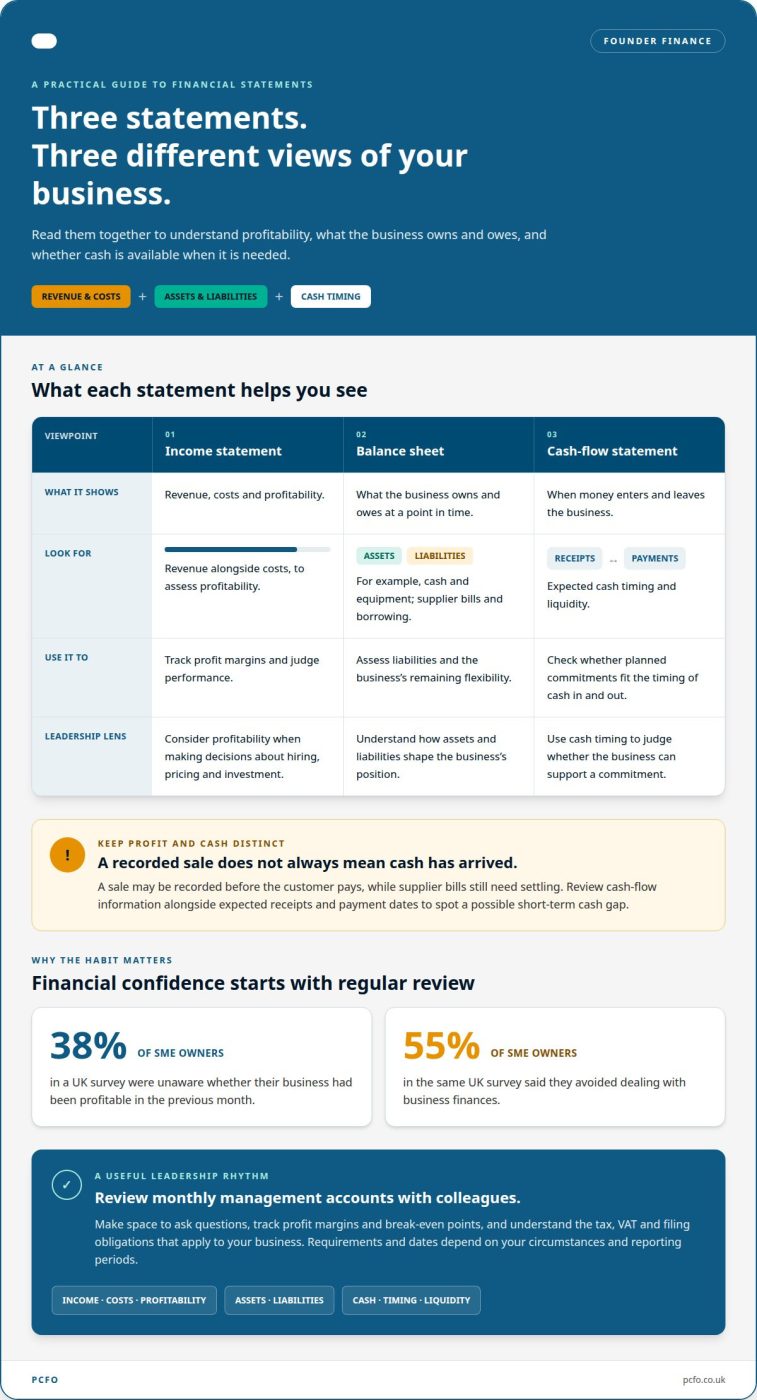
A balance sheet shows what a business owns and owes at a point in time. Assets may include cash, equipment and amounts customers owe; liabilities may include supplier bills and borrowing. Understanding both helps you assess the business’s liabilities and remaining flexibility. For instance, buying equipment with borrowed funds adds an asset and a liability, but repayments still affect future cash availability.
Cash-flow management focuses on when money enters and leaves the business. A company can record a sale but still face a short-term cash gap if the customer pays later. A cash-flow statement helps you track liquidity and decide whether planned commitments fit the expected timing of receipts and payments.
Mixing personal and business finances makes it harder to identify performance, liabilities and available cash. Personal spending can also obscure the purpose of transactions. Use separate accounts and keep clear records of business income, costs and money introduced by the founder. This creates a more reliable picture for planning and informed decisions.
3. The role of business leaders and founders in improving financial literacy
Founders set the tone by making financial education part of everyday business decisions. A UK survey found 38% of SME owners were unaware whether their business had been profitable in the previous month, while 55% said they avoided dealing with business finances. Reviewing monthly management accounts with colleagues can build confidence and make questions easier to raise.
Financial statements offer a practical starting point. Use the income statement to assess revenue, costs and profitability; review the balance sheet for assets and liabilities; and use cash-flow statements to understand liquidity. Then track profit margins and break-even points. These measures help you make informed decisions about hiring, pricing and investment, rather than relying on sales alone.
Understand the tax and reporting obligations that apply to your business, including relevant taxes, VAT responsibilities and filing deadlines. Requirements and dates depend on your circumstances and reporting periods, so keep a clear calendar of applicable returns and payments. Qualified accountancy guidance, such as the small business advisory support provided by POP Business, can help clarify how the rules apply to specific decisions.
The most useful skills are budgeting, forecasting, interpreting financial statements, understanding debt and assessing risk. Courses in bookkeeping, accounting or business finance can develop these abilities. Course costs depend on the provider, format and depth of study; compare the syllabus with the decisions you need to make, such as reading a profit and loss statement.
To strengthen financial literacy across a team, founders can run short workshops using real business examples, such as explaining how supplier payment terms affect cash flow. Business networks can also share learning through mentoring, events and financial education programmes. For free starting points, explore publicly available educational material from Martin Lewis at MoneySavingExpert, The Guardian and Which?.
4. Financial literacy and entrepreneurship
Financial skills help entrepreneurs connect daily decisions with long-term business goals. A forecast, for example, can show whether hiring another employee is affordable before expected sales arrive. Reviewing sales trends alongside operating costs helps you distinguish growth opportunities from activity that adds workload without improving returns. The value lies in using financial learning to support a clear decision, not simply collecting figures. To improve financial literacy for founders, apply financial concepts to live decisions.
Use a forecast to test different scenarios before committing resources. Compare expected income and costs under steady sales with a slower-sales scenario. If the business can still meet planned commitments, the decision may fit its capacity. If not, adjust the timing, scope or funding plan. This helps you prepare for changing conditions and identify where a more flexible business model may be needed.
Financial measures can sharpen investment choices. Gross margin shows how much revenue remains after direct costs, while return on investment helps assess the value created by spending. The current ratio compares current assets with current liabilities, offering insight into short-term obligations. Consider these measures together: a project with attractive expected returns may still strain cash if costs arrive before customer payments.
Financial knowledge matters when seeking funding or preparing for an exit. Forecasts and past performance can support a business plan that explains how funding will be used. Understanding valuation helps you assess how proposed terms affect ownership. For example, compare the proposed investment amount, company valuation and resulting ownership before agreeing to a funding structure. Improving financial literacy for founders also means understanding how financial assumptions shape these negotiations.
Build these skills through regular review. Set a recurring meeting to discuss performance, forecast changes and key assumptions with decision-makers. Record the reasoning behind major choices, then compare expected outcomes with actual results. This creates a practical learning loop and builds confidence over time. To connect financial analysis with your growth plans, explore strategic finance support.
PCFO: Chief Financial Officer Services
PCFO provides Chief Financial Officer Services to help founders connect financial information with strategic business decisions. This support can be useful when growth plans, funding choices or cash-flow pressures call for a clearer financial view.
Finance Director Services provide ongoing financial planning and oversight, while Business Growth Advisory and Business Planning Consultant services help founders assess opportunities and plan for the next stage. The right focus depends on the decisions facing your business and the financial insight you need to make them.
You remain responsible for leading your company, but experienced financial input can help turn reports and forecasts into practical options. Contact PCFO to discuss the financial support that fits your business needs.
Make financial learning part of your next decision
Financial confidence grows when you apply what you learn to real business choices. Before making a new commitment, ask which assumptions matter most, what could change and what financial information would help you decide. Over time, this habit makes financial literacy an active part of leadership, not just a task for reporting periods.
A practical way to improve financial literacy for founders is to connect learning with the decisions ahead. If you’re preparing for growth, funding or a change in direction, consider what financial expertise would help you assess the options and plan the next stage.
PCFO offers Finance Director Services, Chief Financial Officer Services and Business Growth Advisory to support business owners with financial strategy and growth planning. The right support can turn complex financial questions into clearer choices, while you retain responsibility for leading the business.
Contact PCFO to discuss your finances and take a considered next step towards leading with greater financial clarity.
Frequently Asked Questions
What is Financial Literacy?
Financial literacy is the ability to interpret financial information and use it to make informed choices. For a founder, that means understanding what a figure tells you and what it leaves out. For example, rising revenue alone doesn’t show whether margins are healthy or customers pay promptly. Strong financial literacy helps connect financial evidence with business priorities, while identifying when specialist input would support a decision.
How can founders learn to read profit and loss statements, balance sheets and cash flow forecasts?
Start with a reporting period and trace how figures relate across the three documents. On a profit and loss statement, identify revenue, direct costs and operating expenses. On the balance sheet, distinguish what the business owns from what it owes. Then compare a cash-flow forecast with actual bank movements, noting timing differences. Ask a finance professional to explain unfamiliar entries using your own transactions.
How can founders build and manage a startup budget and cash flow forecast?
Build the budget from expected sales and planned costs, and write down the assumptions behind each estimate. In the cash-flow forecast, record when customer payments are expected and when payroll, supplier and other bills fall due. Update both documents when a contract, hiring plan or payment date changes. Compare actual results with forecasts and investigate material differences so decisions reflect current trading conditions.
What financial metrics and KPIs should early-stage founders track?
Choose measures that answer the business’s current questions. Operating cash flow shows whether core trading generates cash; revenue growth rate tracks sales direction. Gross and net profit margins show what remains after direct costs and broader expenses. An operating expense ratio helps monitor overheads, while working-capital and debt-to-equity ratios offer insight into short-term obligations and borrowing. Review each measure consistently and connect it to a decision.