

Vendor due diligence is an independent review of a business, commissioned and usually paid for by the seller before or during a sale. A vendor due diligence checklist for sellers helps organise the company, financial, legal, cybersecurity and reputational records a buyer may review. It can surface issues early, but it does not usually replace the buyer’s own due diligence.
Preparing for scrutiny can feel daunting, particularly when records are spread across teams or tell inconsistent stories. A clear, well-organised evidence base makes it easier to explain how the business operates and answer questions while keeping the sale process on track.
This article explains what vendor due diligence involves and how to prepare for buyer review. It covers practical checks for company structure and leadership, financial performance and commitments, cybersecurity and legal matters, and reputation-related records. It also highlights common preparation gaps that can prompt follow-up questions or delays, helping you approach the process with greater clarity and control.
Key Takeaways
- Bring company records, leadership details, licences and corporate structure documents together so buyers can understand who owns and runs the business.
- Prepare financial records that explain performance, cash flow, debts and assets, and make sure figures can be reconciled and clearly explained.
- Organise records of disputes, sanctions-related checks and reputational matters to support a clear, consistent account of potential risks.
- Gather property, environmental and health and safety documentation relevant to the business, so buyers can assess its premises and operational responsibilities.
Company identity, leadership, licences and corporate structure
Start by matching the company’s registered identity across its records. Compare its legal name, company number and registered office with its Companies House information, and note any differences so you can explain them.
Use this check to build a clear picture of who owns and controls the business. Buyers may compare formal records with the organisation chart, leadership information and licences provided for review.
- Check the legal name, company number and registered office against Companies House records. Consistent identifiers help buyers connect the business to its corporate filings and sale documents.
- Gather the articles of association, shareholder agreements and statutory registers. Together, these records show the company’s governing arrangements, ownership and recorded interests.
- Prepare a current ownership structure showing shareholders and any parent or subsidiary companies. A clear chart helps buyers understand how the proposed sale relates to each entity.
- List directors and senior leaders, their roles and reporting lines. This gives buyers a practical view of who makes decisions and where key responsibilities sit.
- Compile relevant licences and permits, including their scope and renewal information. Buyers can assess whether the documented permissions align with the activities the business carries out.
- Record existing or threatened disputes alongside relevant corporate documents. A concise, consistent account helps buyers understand the matter and its potential effect on the transaction.
Common red flags include incomplete records, unexplained differences between Companies House information and sale documents, unclear ownership, missing licences and disputes disclosed late. These can prompt further questions, delay the process, affect valuation or other deal terms, or lead a buyer to reconsider proceeding.
Before sharing records, compare names, dates and ownership details across documents. For example, check that the shareholder agreement and ownership chart show the same structure, then flag any differences with a clear explanation. This makes the company’s legal and corporate position easier for a buyer to assess.
Financial records, tax obligations, loans and assets
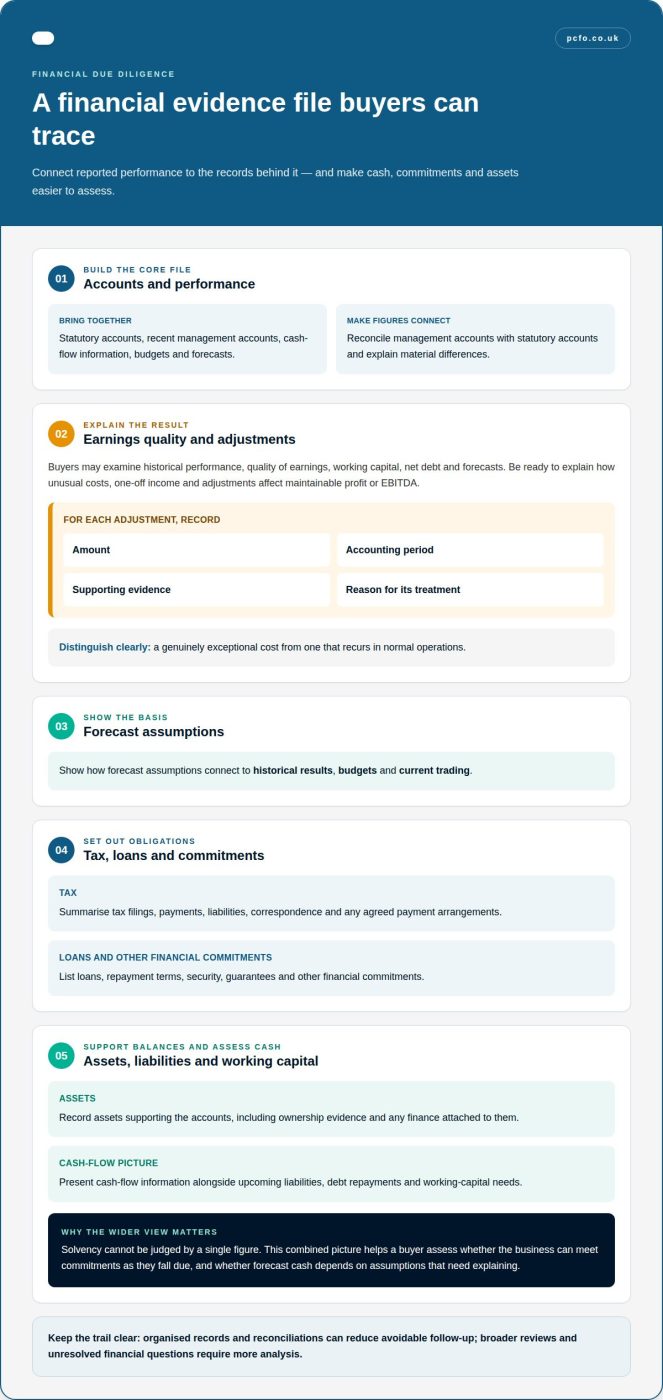
Prepare a financial file that lets a buyer trace reported performance to the underlying records. Include statutory accounts, recent management accounts, cash-flow information, budgets and forecasts. Add schedules for debt, financial commitments and business assets so balances can be reconciled rather than explained from memory.
Financial vendor due diligence examines historical performance, quality of earnings, cash flow, working capital, net debt and forecasts. Buyers may ask how unusual costs, one-off income and adjustments affect maintainable profit or EBITDA. For each adjustment, record the amount, accounting period, supporting evidence and reason for its treatment. For example, distinguish a genuinely exceptional cost from one that recurs in normal operations.
- Reconcile management accounts with statutory accounts and explain material differences.
- Show how forecast assumptions connect to historical results, budgets and current trading.
- Summarise tax filings, payments, liabilities, correspondence and any agreed payment arrangements.
- List loans, repayment terms, security, guarantees and other financial commitments.
- Record assets supporting the accounts, including ownership evidence and any finance attached to them.
Solvency cannot be judged by a single figure. Present cash-flow information alongside upcoming liabilities, debt repayments and working-capital needs. This helps a buyer assess whether the business can meet commitments as they fall due and whether forecast cash depends on assumptions that need explaining.
How long does vendor due diligence take and how much does it cost in the UK? The timetable and fee depend on the review’s scope, the business’s size and complexity, and how complete its records are. Clear reconciliations and organised documents can reduce avoidable follow-up, while broader reviews and unresolved financial questions require more analysis.
If financial reporting, forecasts or transaction preparation need sharper oversight, Finance Director Services can help you organise the financial picture for buyer review.
Litigation, sanctions and reputational checks
Give buyers a clear record of disputes, screening and public-facing concerns. Include existing or threatened litigation, regulatory correspondence, formal complaints and internal investigations. For each matter, summarise its status, key dates, parties involved and supporting documents. Keep the summary consistent with correspondence and board records.
- List current and threatened claims, including the claimant, issue, stage and next known action. This helps buyers understand the dispute’s context and assess what information remains outstanding.
- Gather relevant legal correspondence, settlement documents and records of outcomes. A complete file lets buyers follow the matter from initial notice to its current position.
- Record sanctions screening undertaken for the company, relevant owners, directors and key counterparties. Keep the date, scope, result and follow-up notes together to explain the checks performed.
- Document any identified screening match and the steps taken to assess it. A clear audit trail helps distinguish a resolved false match from an issue requiring further review.
- Review customer complaints, supplier disputes and employee grievances for recurring themes. For example, repeated complaints about delivery delays may point to an operational concern affecting reputation.
- Check public statements, press coverage and customer reviews for material claims about the business. Prepare evidence-based responses where a published allegation is disputed or outdated.
- Compare disclosures across legal files, management reports and public communications. Consistent descriptions reduce the risk of buyers finding conflicting accounts during review.
Use one matter register to track each issue, its owner, supporting documents and latest status. Separate confirmed facts from allegations, and do not present unresolved claims as settled outcomes. If a dispute changes during the sale process, update the register and related records together.
Late disclosure of a material dispute can prompt more buyer questions and delay a transaction. Findings may also affect the purchase price or other deal terms, increase deferred consideration or earn-outs, or lead a buyer not to proceed. A prepared, traceable record helps explain the issue without minimising its significance.
What property, environmental and health and safety records should be included?
Create a separate file for each business site, including its address and whether the company owns, leases or occupies it under another arrangement. Match each property record to the premises used in operations, such as a warehouse, office or workshop. Buyers can then connect site-level risks and costs to the activities carried out there.
- Include title documents, leases, licences to occupy, rent information and details of break clauses or renewal dates. These records show the basis for occupying each site and any commitments that may affect a buyer.
- Gather available planning permissions, building-control records, surveys and plans. Flag alterations, extensions or changes of use so buyers can compare the current premises with their supporting documents.
- Provide maintenance schedules, inspection reports and records of significant repairs. For example, a roof survey and repair invoices can help explain known defects and planned work.
- Collect environmental assessments, permits, waste records and relevant site-history information. Note any identified contamination, spills or remediation, with supporting reports and records of actions taken.
- Include asbestos information, fire-risk assessments, equipment inspections and workplace risk assessments. Keep each record linked to the relevant site, activity or piece of equipment.
- Organise accident and incident logs, investigation outcomes, staff training records and contractor safety information. These documents help buyers understand how issues were recorded and addressed.
Use a document index that shows each record’s site, date, subject and latest status. If a survey identifies water ingress, for example, link the report to repair records and any follow-up inspection. This creates a traceable account instead of leaving buyers to piece together evidence from separate folders.
Separate completed actions from open issues. A schedule of outstanding maintenance, environmental follow-up or safety improvements helps buyers understand what remains and how it may affect operations. Keep the schedule consistent with site reports and internal records, and update it if circumstances change during the sale process.
For support aligning financial planning with property-related commitments during a sale, plan your business finances.
PCFO: Finance Director Services
PCFO’s Finance Director Services and Chief Financial Officer Services can support your financial preparation. They are relevant when management accounts, forecasts or explanations of earnings adjustments need clearer oversight before buyer review.
A finance director can help bring financial information together, connect forecasts with business performance and prepare you to explain the assumptions behind them. If you are considering a sale alongside growth plans, PCFO’s Business Growth Advisory or Business Planning Consultant services can help align the transaction with the company’s wider direction.
Turn to PCFO when you need strategic financial input to organise reporting and plan for buyer scrutiny. Contact PCFO or visit its website to discuss your business’s needs.
Make preparation part of your next-step planning
A vendor due diligence checklist for sellers works best as a live planning tool, not a last-minute folder of documents. Use it to track who owns each action, monitor open issues and keep information aligned as the business develops. This makes preparation part of your wider sale strategy, rather than a separate administrative task.
PCFO’s Finance Director Services, Chief Financial Officer Services and Business Growth Advisory can support businesses as they organise financial information and plan for a transaction. Bringing this perspective in early can help connect sale preparation with the company’s broader priorities.
If you’re ready to plan your next steps, contact PCFO to prepare. A clear, considered process can help you approach buyer review with greater confidence and keep attention on the future you’re working towards.
Frequently Asked Questions
What is Vendor Due Diligence?
Vendor due diligence is an independent review of a business commissioned by its seller before or during a sale process. It can bring financial, legal, commercial, tax, technology and operational findings together in a structured report. Sellers use it to identify issues and prepare explanations before buyer scrutiny. It informs the sale process, but buyers normally conduct their own due diligence too.
What Are 10 Critical Items to Include in Your Due Diligence Checklist?
Include these ten areas: company identity and ownership; leadership; licences and permits; financial records; tax matters; loans and commitments; customer and supplier arrangements; employees; intellectual property and technology; disputes, reputation, property and safety records. For each area, note the responsible person, where the evidence is stored and whether anything needs explaining. This makes the checklist useful for tracking preparation, not just collecting files.
What Does the Due Diligence Process Involve?
The process usually starts by defining the review’s scope and gathering documents in an organised, access-controlled data room. Advisers examine the evidence, record findings and raise questions where information is missing or inconsistent. The seller responds with supporting records or explanations, then updates disclosures as circumstances change. Buyers review the material independently and may ask further questions that affect negotiations or transaction terms.
What Is Due Diligence Really Like for a Business Owner?
For a business owner, due diligence means explaining how the company works, not simply uploading paperwork. You may need to coordinate with finance, operations and legal advisers while answering buyer questions. For instance, a buyer may ask why a customer contract differs from the sales team’s summary. Clear records and consistent answers help keep the review manageable.
When should I start preparing for due diligence?
Start preparing before formally presenting the business to bidders. Early preparation gives you time to locate records, resolve inconsistencies and understand issues that could influence the sale. Assign owners for each information area, create a document register and track missing evidence. This helps prevent preparation from competing with negotiations and day-to-day business decisions.
What is a vendor due diligence checklist for sellers?
A vendor due diligence checklist for sellers is a working list of records and questions to prepare before buyer review. It helps you assign responsibility, track documents and flag gaps that need attention. For example, it can show that a contract is filed but its renewal terms still need explaining. Keep it current as information changes, and use it to coordinate responses across the business.